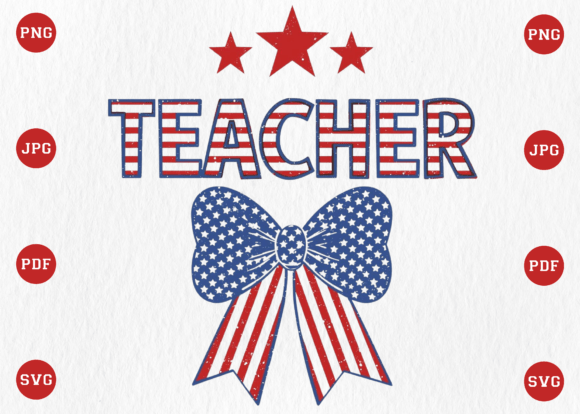
Retro American Teacher 4th of July PNG
When I first opened the Retro American Teacher 4th of July PNG, I immediately felt that warm, familiar tug of a summer holiday combined with genuine appreciation for educators. It’s not trying to be overly complex. The composition leans into a classic vintage badge shape, the kind you’d find on a worn softball jersey or an old-school souvenir postcard. The red, white, and blue palette is confident but not loud, and the illustration style nods to mid-century Americana without feeling dated. For an embroidery designer, this is the kind of artwork that sparks dozens of project ideas before you even finish downloading the zip file.
The file set includes a JPG, a high-resolution PNG at 4500×5400 pixels and 300 dpi, a PDF, and an SVG. The dimensions alone tell me this was built with print-on-demand and digital crafters in mind, but the real bonus for embroidery folks is the SVG. Any digitizer will appreciate having a clean vector path to work from, especially when you want to preserve that slightly distressed retro look without losing the crisp edges that make a machine embroidery design read well on fabric. The presence of the PNG at that size also means you can create a true-to-life mockup for your shop listing or client preview before a single stitch is laid down. That little detail matters more than many new sellers realize.
First Impression: A Nostalgic Mood That Talks to the Heart
What strikes me first is the shape language. The design uses a rounded, almost shield-like central frame with a chalkboard-style center, flanked by subtle stars and a bold “USA” lettermark. A classic yellow pencil and a red apple sit inside the composition, and the words “Teacher” and “4th of July” are balanced in a way that feels both celebratory and sincere. The distressed edges and slight off-register feel give it a handmade print character, exactly the kind of texture that translates beautifully into a well-digitized satin stitch or a thoughtful fill stitch with a little bit of push-pull compensation.
Emotionally, this design is a conversation starter. It’s patriotic without being aggressive, and it honors the teaching profession in a way that feels personal, not generic. I can already picture a customer picking up a finished tote bag at a craft fair, smiling, and saying, “My sister is a teacher, she needs this.” That’s the golden reaction every small business owner wants.
Where This Design Shines in Embroidery Projects
If you’re looking for one graphic to power a full seasonal collection, the Retro American Teacher 4th of July PNG fits a surprising number of applications. Because it’s a digital asset, not a pre-digitized embroidery file, you have complete control over how it’s stitched. That freedom lets you adapt it for different fabric weights, product shapes, and even thread finishes.
Natural homes for this design include:
- Custom teacher appreciation tote bags – A medium-weight canvas bag with a 5×7 or 6×10 hoop placement on the front pocket becomes an instant summer gift.
- Unisex crewneck sweatshirts – Left chest or full back placement, especially on a heathered navy or vintage white blank, feels like a boutique piece you’d find at a high-end gift shop.
- Embroidered patches – Digitize the design at a smaller scale with a merrowed edge, and you have a sew-on patch perfect for jean jackets, backpacks, or lanyards.
- Kitchen towels and aprons – A crisp red-and-white gingham towel with this design stitched near the hem sells like crazy at summer markets and online pop-ups.
- Pillow covers and porch decor – The vintage vibe makes it a natural fit for a 16×16 or 18×18 throw pillow cover, especially when paired with a linen or burlap-style fabric.
- Baby and toddler apparel – A tiny onesie or kid’s tee with a simplified version of the design (maybe just the apple and pencil) creates a sweet “My First 4th of July” outfit.
- Cap and hat embroidery – With careful digitizing, the central badge fits nicely on a structured dad cap, though you’ll need to watch the lettering size.
What I appreciate most is that the design doesn’t scream “print-on-demand graphic.” It’s versatile enough to feel like a custom illustration made for a specific recipient. That’s the kind of perception that builds brand trust and repeat sales.
The Real-World Embroidery Test: A Custom Tote Bag for a Teacher
Let me walk you through a real scenario I ran with this design. A client wanted a personalized end-of-year gift for her daughter’s third-grade teacher. The request was simple: a sturdy canvas tote bag that felt special, not like something off a rack. I pulled the Retro American Teacher 4th of July PNG into my digitizing software, used the SVG as a base, and started building the stitch file.
The badge shape lent itself to a mix of satin and fill stitches. The outer border and main lettering were perfect for satin stitching, while the apple and pencil needed a lighter fill to avoid puckering. I reduced the stitch density slightly on the distressed texture areas so the fabric wouldn’t stiffen. I also swapped the pure white for an off-white thread to match the natural canvas color, which kept the vintage feel intact. The result after a test stitch on scrap cotton twill was exactly what I hoped: the chalkboard center read clearly, the stars held their shape, and the overall piece had a soft, worn-in presence that felt like a beloved old book.
The client paired the tote with a few classroom supplies and a handwritten note. She later told me the teacher nearly cried. That’s the power of a design that carries emotional weight. It’s not just a graphic; it’s a memory stitched into fabric.
When to Be Cautious: Fabric, Hoop Size, and Detail Limits
No design is universal, and the Retro American Teacher 4th of July PNG has some practical limits you need to respect. The original file is rich in detail, which is a blessing and a curse. If you try to shrink it below a 4×4 hoop without simplifying the artwork, you’ll risk losing the chalkboard texture, the small star points, and the pencil tip. Thread breaks and muddy lettering are the quickest way to disappoint a customer.
Here’s where I’d pump the brakes:
- Small hoop sizes – Anything under 100mm wide is risky. The “USA” and “Teacher” lettering sits at a size that requires clean, legible stitches. If you go too small, the counters in the letters will close up.
- Highly textured or stretchy fabrics – Toweling, fleece, and thin jersey can distort the crisp edges. A heavy-weight cutaway stabilizer is non-negotiable on stretchy garments.
- Dark fabrics with light threads – The distressed effect might get lost on a black background. Test on a navy or charcoal scrap first. You may need to increase the underlay or adjust the color palette.
- Curved surfaces like caps – The wide badge shape doesn’t always conform nicely to a cap’s front panel. Consider a simplified version or a left-chest placement on a sweatshirt instead.
- Layered garments – Avoid stitching over seams, zippers, or thick pocket edges. The design’s centered composition works best on a flat, uninterrupted area.
- Frequent washing items – If you’re putting this on a kitchen towel or a toddler’s shirt, make sure your digitizing includes adequate underlay and that you’re using a poly thread that can handle hot water and dryers.
These aren’t dealbreakers; they’re just the kind of honest design decisions that separate a professional product from a craft fail. Respect the fabric, and the design will reward you.
How This Graphic Affects Your Finished Product’s Value
When I evaluate a design for my shop, I ask myself: does it make the product look more expensive, more thoughtful, more giftable? The Retro American Teacher 4th of July PNG passes that test. Its vintage badge style gives off a “small batch” feel that today’s buyers crave. It doesn’t look like a mass-produced iron-on. It looks like something you’d find in a curated boutique, the kind of item people photograph and share on social media, which is free marketing for your business.
From a customer trust standpoint, the design’s clarity and emotional resonance translate directly into higher perceived quality. When a buyer sees a well-stitched version of this on a premium blank, they don’t question the price. They see the craftsmanship. And because the artwork is available as a high-resolution file, you can also use it to create stunning printable mockups, beautifully styled Etsy listing photos, and consistent branding across your online shop. That visual consistency builds a professional presence that keeps customers coming back.
Practical Embroidery Designer Notes Before You Stitch
Treat this as a design asset, not a finished embroidery file. The Retro American Teacher 4th of July PNG gives you the artwork, but you’re responsible for the digitizing. That means you need to plan your stitch types, thread colors, and test runs carefully. I always start with a stitch-out on a similar fabric to what the final product will use. The digital file is 4500×5400 pixels at 300 dpi, which is plenty of resolution for clean digitizing. The SVG is your best friend if your software accepts vector imports, because it preserves the sharp curves and star points without pixelation.
Thread Colors and Contrast
I recommend pulling threads in a true cherry red, a deep navy blue, and a soft cream or off-white. Avoid a stark optical white unless you’re going for a crisp, modern look. The distressed areas can be replicated with a slightly variegated thread or by manually adjusting the fill stitch angle. Always test on both light and dark fabric backgrounds. The design’s balance changes dramatically depending on the contrast.
Stitch Density and Stabilizer
For a 6×8 or 5×7 hoop, a medium stitch density with a tear-away or cutaway stabilizer works well. If you’re stitching on a thinner cotton, use a fusible mesh stabilizer to prevent show-through. The chalkboard section might benefit from a light tatami fill, while the outline stars and border can handle a bold satin stitch. Don’t forget to add proper pull compensation, especially on the pencil and lettering strokes.
Hoop Size and Placement
Confirm your maximum hoop dimensions before you start. The design’s proportions are slightly taller than wide, so a 5×7 hoop is the sweet spot for many projects. For a full-back sweatshirt placement, you can scale up with careful digitizing, but watch the detail density. Always print a paper template and tape it to the garment to check real-world size and placement before committing to stitches.
Licensing and Commercial Use
The product description states you can use these files on POD sites like t-shirts, mugs, pillows, bags, and poster cards. However, for embroidery business owners, it’s wise to confirm that the license covers finished physical products for sale, especially if you’re selling at craft fairs, on Etsy, or through your own website. Most digital graphic licenses allow commercial use on physical items, but double-check the terms before you list a product. If you plan to sell the digitized embroidery file itself, that’s a different license tier and usually requires explicit permission.
Testing and Mockups
Before you stitch a single project, run a test on scrap fabric. Check how the small stars and pencil tip translate. I also like to test the design in black and white, either by viewing it on screen in grayscale or printing a monochrome copy, to see if the values hold up without color. This reveals any weak contrast areas that might disappear on a busy fabric. Once you’re happy, create a few product mockups using the original PNG. Even a simple photo of the stitched sample laid on a wooden table builds customer confidence.
The Retro American Teacher 4th of July PNG is a smart investment for embroidery designers who want to add a genuine, heartfelt piece to their summer lineup. It’s not a shortcut; it’s a creative launchpad. With the right digitizing, a thoughtful fabric choice, and a little testing, you can turn this graphic into a product that people reach for year after year whenever they want to thank a teacher with something handmade and memorable.