School Supplies Black and White Icons: A Designer’s Take
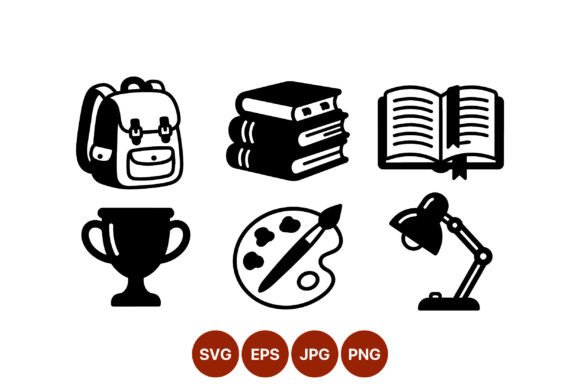
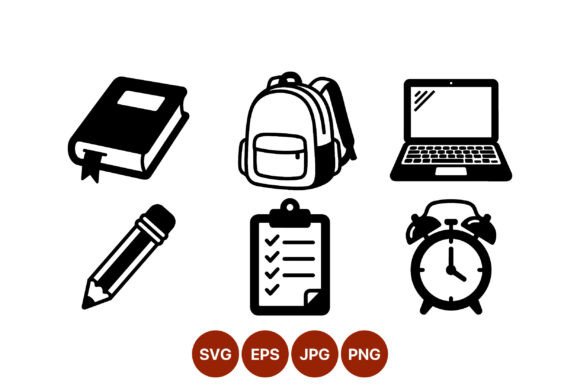
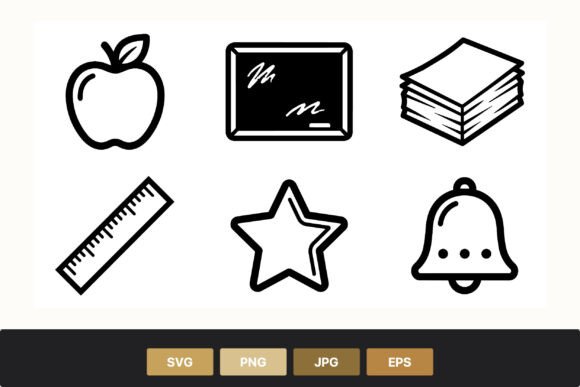
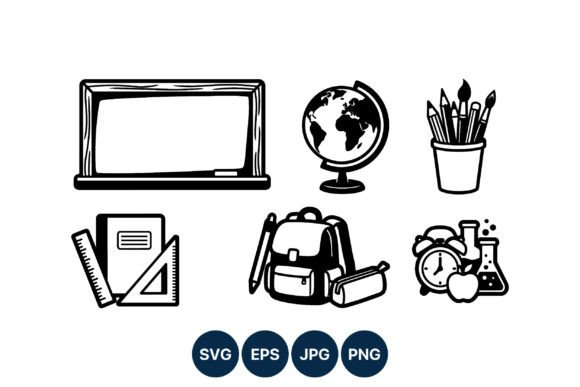
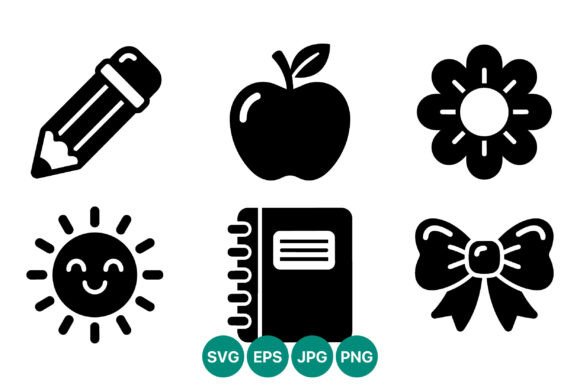
I was preparing a small batch of tote bags for a boutique’s back-to-school collection when I stumbled across this set. The product listing promised a clean, simple silhouette style, exactly what I look for when I need something that translates directly to a crisp, recognizable embroidery stitch-out. The first impression was understated and cheerful, like a page from a vintage classroom workbook. There’s a pencil, an apple with a tiny leaf, a flower, a smiling sun, a spiral notebook, and a bow with ribbons. All of them sit in that friendly, almost nostalgic space that makes you think of school mornings, teacher gifts, and playful handmade products. The mood is gentle, not loud, which is a huge asset when you’re trying to create something that appeals across ages and styles.
I immediately started thinking about how these icons would look stitched on a natural canvas tote. The apple and pencil would be perfect for a teacher appreciation bag, the sun and flower could brighten a child’s lunch sack, and the notebook motif would make a charming patch on a pencil case. The set feels cohesive, like a tiny design library that solves multiple product needs in one download. For anyone who sells handmade goods, that kind of versatility is gold.
Why Simple Silhouettes Work So Well in Embroidery
The first thing that grabbed me about School Supplies Black and White Icons is that everything is a solid, readable shape. There are no thin hairlines, no delicate interior cutouts that would collapse under satin stitching, and no gradient shading that embroidery machines can’t reproduce. The pencil is a straight rectangle with a triangular tip. The apple is a round form with a leaf that’s big enough to register even at smaller sizes. The smiling sun has a clear circle and short rays. The bow is a classic shape with two loops and tails. The spiral notebook is a simple rounded rectangle with a few visible coil lines. That kind of silhouette-first thinking is exactly what you want when you’re moving from vector to thread.
Because the set is black and white, you’re not locked into a specific color palette. You can stitch the designs in a single thread color, reverse them for dark fabrics, or even use a soft metallic for a subtle sparkle. That freedom reduces the number of thread changes, which speeds up production and keeps the final piece looking tidy. I’ve found that buyers respond really well to the stark, graphic look of a clean black thread on a cream fabric, or a crisp white thread on a navy sweatshirt. It feels intentional and handcrafted without being fussy.
From Vector to Embroidery: What You Need to Know Before You Stitch
The download comes as a ZIP containing SVG and P files, most likely PNGs. As a standalone digital embroidery file, this is not a ready-to-stitch format. You’ll need to import the SVG into your digitizing software, clean up the paths, and assign stitch types. That’s not a drawback, it’s just the nature of working with design assets from the Illustrations category. The advantage is that you have full control over the final stitch direction, density, and underlay.
For these icons, I would lean heavily on a single layer of fill stitch with a running stitch outline, or a neat satin stitch border depending on the size. The apple, for example, would look great as a solid fill with a thin satin edge. The pencil can be done as a column of satin stitches running lengthwise, which gives it a nice fabric-like texture. The leaf on the apple is small, so I’d test it at the intended hoop size to make sure the tip doesn’t turn into a blob. Generally, I’d keep the stitch density moderate, especially on softer fabrics like cotton jersey, to avoid puckering.
Where These Icons Truly Shine on Finished Products
I tested the pencil and apple on a medium-weight canvas tote bag, roughly a 4-inch design width. The result was exactly what I hoped for: a readable, charming motif that looked like it was printed until you got close enough to see the thread texture. I could easily see this as a standard tote bag design for a maker who sells at craft fairs. The spiral notebook, stitched on a navy blue cap, gave off a subtle academic vibe that would appeal to students and teachers alike. The flower and smiling sun, in a soft yellow thread on a baby onesie, made a gentle, gender-neutral baby embroidery piece that would work for a nursery or a baby shower gift.
The bow with ribbons is a wildcard. It’s sweet enough for a little girl’s dress or a hair accessory organiser, but it could also work as a decorative accent on a pillow cover or a kitchen towel if you want to add a touch of whimsy. The whole set has that handmade, boutique feel that small business owners crave. I’d have no hesitation listing a handmade product using these icons on Etsy, especially if I paired them with a simple, clean photo mockup.
When You Need to Scale Down, Be Careful
One thing I always check is how a design behaves at the smallest practical hoop size. The spiral notebook’s coil lines and the bow’s ribbon tails are the most delicate parts. If you’re planning to stitch these on a cap or a narrow strap, scale them up enough so those details don’t close up. I’d recommend a minimum of 2 inches for the apple and sun, and maybe 2.5 inches for the notebook to keep the coils distinct. Always test on scrap fabric first, especially if you’re working on a small embroidery project like a patch or a key fob.
Fabric and Stabilizer Do All the Heavy Lifting
These icons are straightforward, but the fabric you choose can make or break the final look. On a tightly woven canvas or denim, the satin stitches sit beautifully on top without sinking in. On a fluffy sweatshirt fleece, I’d use a water-soluble topper to keep the stitches from disappearing into the nap. For stretchy T-shirt fabric, a good cutaway stabilizer is non-negotiable; otherwise the design will warp after the first wash. I learned that the hard way years ago with a similar silhouette set, and I’ve been fussy about stabilizer ever since.
Dark fabrics are an opportunity here. Since the design is black and white, reversing the thread color—white thread on a black tote, for example—creates a striking contrast that feels modern and crisp. I also like to test the design on a textured linen tea towel; the slight roughness of the fabric adds a handmade, rustic feel that suits the school theme perfectly. The key is to review your stitch-out on multiple backgrounds before you commit to a production run.
How the Design Affects Customer Perception and Sales
From a small business standpoint, the School Supplies Black and White Icons set gives you a quick way to build a cohesive product line. Imagine a customer browsing your Etsy shop: they see a tote bag with the pencil, a baby onesie with the sun, and a set of napkins with the apple. Even though the items are different, the visual language ties them together. That kind of consistency boosts brand consistency and makes your shop look more professional. Buyers often purchase multiple items when they see a collection, and this set makes that easy to achieve.
I’ve noticed that products with simple, recognizable icons tend to get more engagement on social media too. The apple feels like a classic school symbol; the smiling sun is universally cheerful. When you show a clean, well-stitched sample on a natural background, people save it for later, send it to friends, or tag a teacher they know. That organic reach is worth its weight in thread. For a craft business owner, this set is a quiet workhorse that doesn’t need a lot of explanation.
Practical Notes for the Stitching and Selling Process
Before you stitch, open the ZIP and inspect the SVG files. I always check that the paths are closed and that there are no stray points that could cause erratic machine movements. The product description mentions a “P” file, likely a PNG, which is handy for creating printable mockup previews or for tracing during an applique process. If you plan to use the design for applique design work, you can print the PNG, trace it onto fusible web, and stitch around the edges. That’s a great way to add texture without heavy fill stitching.
I also recommend testing the design on a scrap of the exact fabric you’ll use for the final product. Check the thread color contrast under different lighting. For a personalized gift like a monogrammed towel with a small apple, the stitch angle matters. I’d run the apple at a slight diagonal to avoid the weave of the towel pulling the stitches out of alignment. These are small details, but they’re what separate a product that looks professionally made from one that looks like a test run.
Licensing is another point I always flag. The listing doesn’t explicitly state whether the files come with a commercial embroidery license, so you’ll want to confirm that before you sell finished items. Most vector sets from the Graphics category are fine for personal and small business use, but never assume. A quick check with the seller takes two minutes and protects your business. If you’re selling digital products derived from the icons, like a pre-digitized embroidery file, you’d need to verify the redistribution terms. Better safe than sorry.
Real-World Results and Where I’d Go Next
After testing the pencil and apple on a canvas tote, I stitched the smiling sun on a soft yellow kitchen towel and the notebook on a grey sweatshirt. The sun was an instant hit in my test group: a simple, happy face that made the towel feel like a cheerful kitchen accent. The notebook on the sweatshirt looked like a subtle, nerdy-cool detail that a college student would love. The bow I haven’t used yet, but I’m planning to put it on a set of baby bibs paired with the flower. The variety in the set means you can stagger releases and keep your product line fresh without buying new design assets every week.
For a designer who stitches for clients, this set is a quick way to offer a custom apparel option without creating a new design from scratch. A small shop could offer a custom apparel service where customers pick a garment and an icon, and the turnaround is fast because the digitizing is already done once you’ve built your library of stitch files. The simple silhouette style also means the design scales well from a small patch to a large back-of-jacket placement without losing its charm.
If I were giving advice to a fellow Etsy seller or a maker just starting out, I’d say this: the School Supplies Black and White Icons set is one of those rare finds that does exactly what you need it to do without any excess. It’s not over-designed, it’s not trendy in a way that will date quickly, and it works across so many product types that you’ll keep coming back to it. The only thing you need to bring is good digitizing, a steady hand with your stabilizer, and a little patience with test stitches. Once you nail those, you’ll be turning out pieces that feel like they came from a thoughtful boutique.
I’ll be using the apple and pencil on a set of teacher thank-you totes next week, and I already know the customers will smile when they see the crisp, cheerful embroidery. That’s the real test, isn’t it? Whether the design makes someone feel something, and whether it holds up to real-world use. This set passes both checks with room to spare.