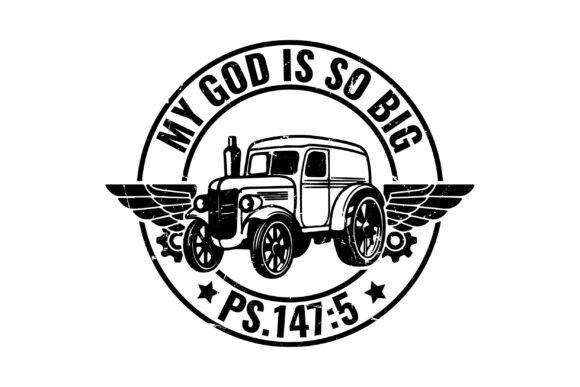
My God is So Big Ps.147 5 Svg: A Designer's Real-Talk Review
Some designs land in your inbox and immediately spark a project idea. Others sit in a folder for months, never quite finding their moment. My God is so Big Ps.147 5 Svg belongs solidly in the first camp. I opened this file on a Tuesday morning, coffee in hand, and within ten minutes I had mentally assigned it to three different blank products waiting in my craft room. That kind of instant creative recognition doesn't happen by accident.
What I want to do here is walk through how this design actually holds up when you stop looking at it on a screen and start imagining it stitched onto fabric, pressed onto a toddler tee, or centered on a canvas tote headed for a church fundraiser. As someone who reviews embroidery assets regularly and runs a small handmade shop, I care less about how pretty a design looks in a mockup and far more about how it behaves under the needle.
First Impressions and the Mood It Creates
Opening My God is so Big Ps.147 5 Svg for the first time, the immediate feeling is warmth. The design carries a gentle confidence, pulling from Psalm 147:5 in a way that feels uplifting without being overly ornate. The typography has a friendly, approachable rhythm. You can imagine this on a baby onesie, a nursery pillow, or a child's Sunday outfit. It doesn't shout. It reassures. That emotional register is hard to get right, and this design lands it naturally.
From a layout perspective, the composition feels balanced. The text flow gives your eye a clear path to follow, which matters enormously when you convert this into a machine embroidery design. A screen can forgive awkward spacing. Thread will not. Based on what I see, the lettering proportions and overall shape suggest a design that should digitize cleanly, provided the person handling the conversion knows what they're doing with satin stitch and fill stitch settings.
Where This Design Feels Most at Home
I have a mental checklist I run for every embroidery file I evaluate. The first question is always, "What product does this naturally belong on?" For My God is so Big Ps.147 5 Svg, the answer came fast. This is a baby embroidery and children's apparel design first and foremost. I pictured it stitched on a soft cotton romper, a tiny sweatshirt, or a nursery blanket. The message fits the setting perfectly.
But stopping there would undersell its versatility. I could also see this working beautifully on a tote bag design for a faith-based boutique, a pillow cover in a child's bedroom, or a kitchen towel given as a heartfelt housewarming gift. For Etsy sellers and craft business owners who build product lines around scripture and encouragement themes, this design fills a niche that parents and grandparents actively search for.
One specific scenario came to mind while reviewing it. I recently prepared a batch of custom embroidered tote bags for a church youth group event. The organizer wanted something that felt personal, faith-centered, and not mass-produced. A design like this, stitched in a soft navy thread on a natural canvas tote, would have been the first sample I showed her. The message is universal enough for all ages, yet tender enough that a child could carry it proudly.
Thinking Through Fabric and Surface Challenges
Every experienced embroiderer knows that a design's success depends heavily on where you stitch it. My God is so Big Ps.147 5 Svg has a typographic structure that makes me cautious about certain surfaces. Here is what I would personally test before offering it to a customer.
On stretchy fabric like a thin jersey t-shirt or a lightweight baby onesie, typography-heavy designs can distort if the hooping isn't perfect and the stabilizer isn't adequate. I would use a quality cutaway stabilizer here, without question. A tear-away might work on sturdy woven cotton, but anything with give needs the extra support to keep those letterforms crisp.
Textured fabrics like terry cloth towels or chunky knit sweaters pose another challenge. The finer details of the lettering could lose definition if the fabric pile is too high. I would test a sample on a smooth tea towel before committing to anything with a heavy loop texture. Similarly, dark fabric requires careful thread color selection. Light thread on dark cotton can look stunning, but any slight misalignment or density issue becomes far more visible than on a cream or pastel background.
For curved surfaces like caps, I would approach with caution. The design's horizontal layout may not follow the arc of a cap front naturally, and if the lettering spans too wide, the outer edges could warp during hooping. I would likely reserve this for flat or gently curved surfaces and save cap embroidery for designs with a more compact or vertical composition.
Hoop Size, Stitch Density, and Practical Constraints
Without knowing the exact dimensions of the source file, I cannot give a specific hoop size recommendation. However, the design's visual weight suggests it would fit comfortably in a medium hoop, likely a 5x7 or 6x10, depending on the final scaling. I strongly recommend checking the hoop size compatibility before purchasing, especially if you work primarily with a 4x4 machine. A design with this much text could become illegible if reduced too aggressively. Lettering shrinks down poorly in embroidery, and what looks charming at six inches wide can turn into a muddy thread blob at three.
Stitch density is another consideration. If the design uses predominantly satin stitch for the lettering, the coverage will be smooth and glossy, but the stitch count will climb. That means longer run times and more thread changes, which affects pricing if you sell finished products. For a handmade product line, I would time the stitch-out, calculate material costs, and set my retail price accordingly. Customers buying a personalized gift with this message will pay for quality, but you need to know your margins.
Running stitch accents or decorative fill elements, if present, would lighten the density and add texture. I would inspect the design file to see how the digitizer balanced these elements. A well-digitized file should feel substantial without being stiff, and the fabric should still drape comfortably after stitching.
Testing Before You Sell or Gift
I always test a new design on scrap fabric before it touches a product destined for a customer. This habit has saved me from countless mistakes. With My God is so Big Ps.147 5 Svg, I would run through a specific checklist.
First, I would stitch it on the same fabric weight and color I plan to use for the final product. If the final piece is a light pink baby blanket, my test swatch should be light pink cotton or fleece, not white muslin. Thread color contrast matters enormously. A soft gold thread on cream fabric might read beautifully on screen but disappear under real lighting. I would test at least two thread color combinations before deciding.
Second, I would review the stitched sample under different lighting conditions. Natural daylight, warm indoor bulbs, and the slightly yellow glow of a craft fair booth all change how embroidery looks. A design meant for holiday gifts or boutique product displays needs to hold up visually in every setting where a buyer might see it.
Third, I would wash the test piece. This is non-negotiable for anything going onto apparel. A sweatshirt embroidery or custom apparel item that shrinks, puckers, or frays after one laundry cycle destroys customer trust instantly. I would wash and dry the sample exactly as the care label instructs, then examine the stitching for any distortion. If the design passes that test, I feel confident listing it.
Commercial Use, Licensing, and Small Shop Realities
For small business owners, Etsy sellers, and craft fair vendors, licensing is not a footnote. It is the foundation of whether you can legally sell finished products featuring this design. The product description mentions an editable gift design that works on mobile and desktop with no software needed, which suggests a user-friendly format. However, I strongly advise confirming the commercial license terms directly with the seller before applying this design to products you intend to sell.
Some digital design assets come with personal-use-only restrictions. Others allow commercial use on physical products but prohibit reselling the digital file. Clarify this upfront. If you plan to use My God is so Big Ps.147 5 Svg on printable mockups or digital product previews, check whether that usage is covered. The same caution applies to design assets bundled into larger template kits. Assume nothing, ask everything, and keep the seller's response in your records.
How This Design Affects Brand Perception
A design is never just a design. It becomes part of your brand story the moment you stitch it onto a product and present it to a buyer. My God is so Big Ps.147 5 Svg carries a message that resonates with a specific audience: faith-focused families, gift shoppers looking for meaningful baby shower presents, and boutique owners who curate around values rather than trends.
When I evaluate whether a design strengthens brand consistency, I ask whether it aligns with the emotional experience my shop promises. For a maker whose brand centers on gentle, heartfelt, scripture-inspired products, this design fits like a missing puzzle piece. It communicates warmth, sincerity, and a sense of timelessness. Those qualities translate directly into buyer engagement and repeat purchases. A customer who receives a beautifully embroidered pillow cover or apron with this message is likely to remember the shop that made it and return for the next gift-giving occasion.
The giftability factor here is high. Scripture-based designs have a natural advantage in the personalized gift market because the message carries meaning independent of the product itself. A grandmother buying a baby embroidery piece for a newborn does not need to be convinced of the value. She already feels it. The design simply needs to deliver that value in thread.
Final Practical Notes for Embroidery Designers
Before wrapping up, I want to leave a few practical notes for anyone planning to use My God is so Big Ps.147 5 Svg in a real embroidery project. These come from years of learning things the hard way, and they apply here just as much as they do to any digital embroidery file you bring into your workflow.
Check the stitch direction on the lettering. Poorly pathed text can create a jagged, amateur look even if the design is beautiful on screen. Run a test stitch on a similar fabric and watch how the thread lays down. If the satin stitch angles shift inconsistently across the words, the finished product will catch light unevenly and look unpolished.
Consider how the design pairs with other elements. If you plan to combine this with a decorative border, an applique design accent, or a name underneath, leave enough space in your layout. Crowding a message this meaningful with too many competing visuals weakens the impact. Sometimes the best design decision is restraint.
Think about your product photography. An embroidered patch or finished tote bag design featuring this scripture will sell better if the listing photos show the texture of the thread, the softness of the fabric, and the scale of the design in context. Flat lay shots work well, but a styled photo with a child's hand resting on the blanket or a mug of tea beside the pillow tells a fuller story.
If you are creating printable mockups for a digital product listing, make sure the mockup reflects realistic embroidery texture. Buyers who purchase Graphics and T-Shirt Designs for their own projects want to see how the final product will look, not just a flat vector preview. The more accurately you represent the stitched outcome, the more professionalism you convey.
Ultimately, My God is so Big Ps.147 5 Svg earns its place in a working designer's library. It fills a genuine need for scripture-based machine embroidery design options that feel current, heartfelt, and versatile enough to span multiple product categories. Test it thoroughly, pair it with quality materials, offer it to customers who value meaning over trend, and I suspect it will become a quiet staple in your product rotation.