Cute Kawaii Black White School Objects Review
When a vector art pack lands in my inbox, I don’t just look at the preview and nod. I imagine pulling it into my digitizing software, setting up a test hoop, and working through what happens when playful lines meet real thread, real fabric, and a real customer’s expectations. The Cute Kawaii Black White School Objects collection immediately grabbed my attention because it sits in that sweet spot between adorable and practical, the kind of design that can quietly anchor a handmade product line without feeling trendy or dated.
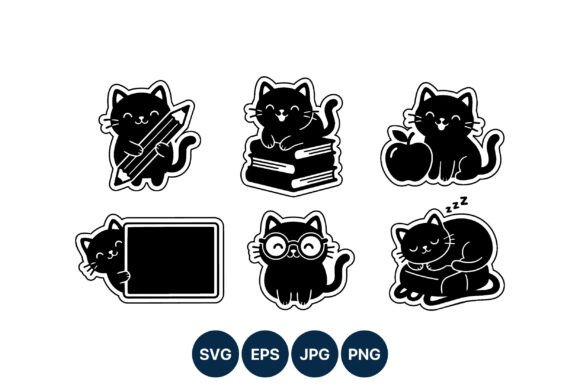
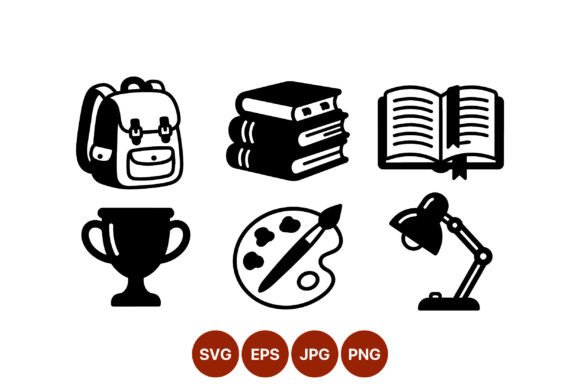
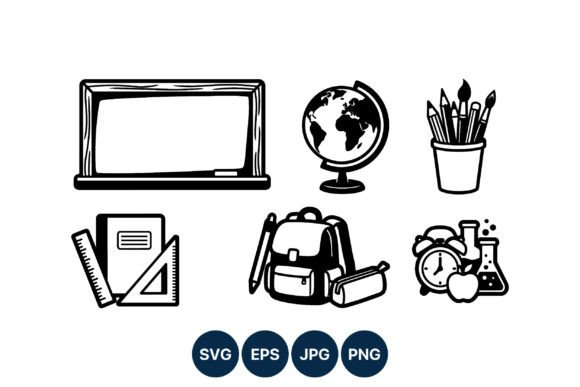
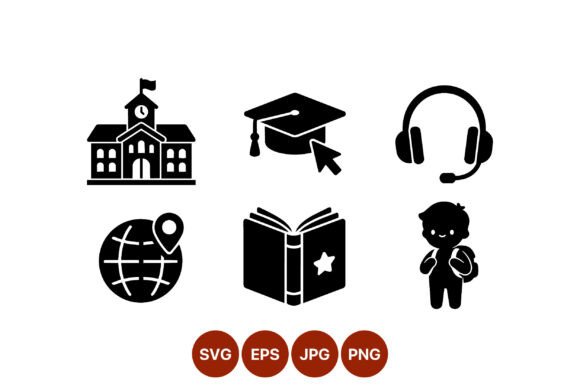
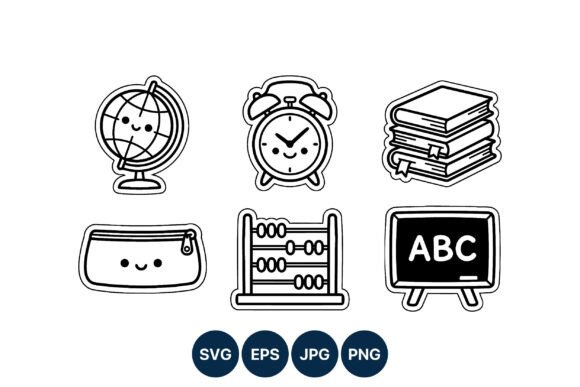
This is a Graphics pack from the Illustrations category, so it’s not a pre-digitized embroidery file. You’re downloading a ZIP with vector art of smiling school objects: a globe, an alarm clock, a stack of books, a pencil case, an abacus, and a chalkboard with “ABC” letters, all in clear black-and-white kawaii style. For an embroidery designer, that means the real work begins with your own digitizing process, but the artwork itself gives you a head start with clean outlines, distinct shapes, and a consistent personality that translates beautifully into stitch planning.
First Impression: The Personality of These Smiling School Objects
Open the file and the mood is immediate. The little faces on each object strike a balance between cheerful and gentle. There’s no over-the-top cartoon energy, just a soft, approachable charm that feels like it belongs on a child’s backpack, a nursery wall decor piece, or a heartfelt teacher appreciation gift. The globe has a tiny smile and rosy cheeks, the alarm clock’s eyes are just two dots and a curved line, and the stack of books looks like it’s nudging you to open a story. This is the kind of visual language that makes customers pause and smile, which is exactly what you want in a handmade product.
The black-and-white line art format is a smart choice for embroidery. It removes the guesswork of color matching and allows you to adapt the design to any thread palette. I can already picture this set digitized with a single color of soft charcoal thread on a natural linen tote bag, or with subtle pastel fills on a baby onesie. The shapes are well separated, which means you can isolate individual elements—the abacus, the pencil case, the chalkboard—and use them as standalone motifs for smaller projects like embroidered patches or cap accents.
Real-Life Scenario: A Teacher’s Tote Bag That Tells a Story
To test the design in my mind, I walked through a typical client project: a custom embroidered tote bag for a kindergarten teacher. I imported the globe, the stack of books, and the “ABC” chalkboard into my digitizing platform and arranged them in a horizontal row. The composition felt balanced without being too rigid. I planned a 5x7 hoop, which gave me enough room to keep the small details readable while leaving white space for a clean, boutique look. The kawaii faces, though tiny, weren’t lost—the eyes and mouths are simple enough to render with a fine running stitch without turning into blobs.
For a tote bag, fabric choice matters. Medium-weight canvas holds stitches well, but I’d still apply a medium cutaway stabilizer to prevent shifting. The black-and-white nature of the design meant I could use a single dark thread and still maintain contrast, or I could digitize the outlines as a black running stitch and leave the interiors open, almost like a coloring book style that feels fresh and modern on natural fabric. This design would also work beautifully on a sweatshirt, a kitchen towel, or a pillow cover—any product where you want a soft, storybook feel.
Stitch Choices and Detail Challenges
When you digitize a design like Cute Kawaii Black White School Objects, the level of detail dictates your stitch types. The outlines are crisp, so a satin stitch around the globe or the alarm clock can give a polished, slightly raised finish. The abacus beads, however, are tiny. At a 4x4 hoop, those beads would be just a few millimeters across, and a satin stitch might bunch up or lose definition. In that case, I’d opt for a simple running stitch outline or treat the abacus as a fill-stitch shape with a single run of beads, keeping the character intact without overcomplicating the stitch file.
The chalkboard’s “ABC” letters are another point to watch. They’re an important part of the school theme, but in embroidery, small lettering can close up if the stitch density is too high or the fabric has any give. I’d test this on a scrap of the same fabric I plan to use for the final product, adjusting the pull compensation and maybe increasing the letter size slightly if needed. The design’s vector format makes scaling easy, so you can tweak proportions without losing quality. That’s a major advantage of starting with a Graphics file rather than a fixed embroidery file.
How the Design Performs on Different Products
I mentally placed this design on a range of items I’ve sold in my own shop. On a custom apparel sweatshirt, the black-and-white line art felt crisp and unisex, appealing to both parents and kids. On a baby embroidery onesie, I’d soften the thread color to a warm gray or a muted navy to keep it gentle. For a tote bag design, using the whole set of objects creates a “teacher essentials” vibe that works beautifully for back-to-school season or holiday gifts. As an embroidered patch, the individual elements—like just the globe or the alarm clock—become collectible little accents that Etsy sellers can list in sets.
One thing I appreciate is the versatility for holiday embroidery projects. The school theme isn’t tied to a single season, so you can use it for year-round gifts, but adding a small “thank you” script or a date turns it into a lovely end-of-year teacher gift. I’ve also seen designs like this used on aprons for parent volunteers or pillow covers in a child’s reading nook, and the kawaii faces make the product feel thoughtful rather than mass-produced.
Where You Should Use It With Extra Care
As much as I like this design, it’s not a one-size-fits-all solution. Small hoop sizes under 4x4 inches will struggle with the full set of objects; you’d need to pick one or two items and simplify. Textured fabrics like terry cloth or heavily napped fleece will swallow the fine lines, so I’d reserve those for simpler shapes. Stretchy fabrics require a good cutaway stabilizer and possibly a topping to keep the stitches from sinking, but the design’s open nature helps because it doesn’t have large solid fills that would distort.
On dark fabric, the black outlines might disappear if you use black thread, so you’ll either need to switch to a contrasting thread color or digitize a white underlay base. I’ve done that before with black-and-white designs, and it works, but it adds an extra step. For curved surfaces like caps, the layout needs to be adjusted; the horizontal row of objects might not arc well, so I’d probably use just the globe or the chalkboard as a centered patch. The key is to test on a similar curve before committing to a batch order.
Customer Appeal and Brand Perception
From a buyer’s perspective, a product stitched with the Cute Kawaii Black White School Objects design has a handmade charm that feels intentional. The black-and-white palette is clean and modern, which helps even a simple tote bag look like a curated boutique item. When customers see it on a listing, they’re not just seeing a decoration; they’re seeing a story. The smile on the globe, the tiny alarm clock, the “ABC” block—these details invite a second look, and that’s what builds engagement and trust.
I’ve noticed that products with this kind of wholesome, educational theme often sell well as personalized gifts. Add a name or a short message, and you’ve got a bestseller for baby showers, classroom volunteers, or even a teacher’s wedding gift. The consistency of the artwork also helps with brand consistency; if you’re building a small shop around learning-themed products, this set gives you a cohesive visual language you can repeat across multiple items.
Practical Designer Notes Before You Stitch
Before you load this design into your machine, run through a short checklist I always follow with any digital embroidery file I create from a vector pack. First, test the design on scrap fabric that matches the final product’s weight and texture. This will reveal any need for stitch density adjustments or underlay changes. Second, check thread color contrast against the actual fabric, not just the screen. A dark gray thread on oatmeal canvas looks different than on bright white. Third, review the stitch order so small elements like the abacus or the chalkboard letters don’t get buried under larger sections.
Since the source is a design assets pack, you’ll also want to confirm the file formats included in the ZIP. Most digitizing software accepts EPS, SVG, or high-resolution PNG. If you’re planning to use it as a printable mockup for your shop, the vectors are invaluable for creating clean listing images. But remember that this is a Graphics product, not a pre-made embroidery file, so you’ll need to digitize it yourself or hire a digitizer. That’s standard for professional embroidery work, and it gives you full control over the final stitch quality.
Always check the license before you sell finished items. Most vector packs allow commercial use for physical products, but you should verify whether there are any restrictions on the number of sales or on selling the design itself as a digital file. I keep a copy of the license in my project folder so I can reference it quickly if a customer asks about wholesale or custom orders.
Is This Design Right for Your Craft Business?
If your shop leans into handmade product lines for children, teachers, or parents, the Cute Kawaii Black White School Objects collection is a practical, low-risk addition to your design library. It’s flexible enough to span from sweatshirt embroidery to baby embroidery to holiday embroidery gifts, and the black-and-white format means you can adapt it to any color scheme without a second thought. I’d recommend it to any Etsy seller looking to create a cohesive back-to-school collection, or to a small shop product maker who wants a design that feels both nostalgic and fresh.
Yes, you’ll need to invest some digitizing time, but the artwork is so clean that digitizing becomes a straightforward process of tracing, assigning stitch types, and testing. The result is a finished product that carries the warmth of handmade work and the polish of a professional design. I’ve already earmarked this set for a batch of teacher appreciation totes and a few nursery pillow covers, and I’m confident it will deliver the same reaction I had when I first saw it: a quiet smile that says, “This is just right.”